16 feb 2022

kamilė česnavičiūtė zaaltekst door Katalin Herzog

 ‘ZIE DE MENS’, IN HET WERK VAN KAMILĖ ČESNAVIČIŪTĖ


De grote schilderijen van Kamilė Česnavičiūtė tonen composities van felgekleurde mensfiguren die in verschillende situaties verkeren. Soms gaat het om een enkele figuur, maar meestal om een groep, waarvan de leden een interactie met elkaar aangaan of als het ware langs elkaar heen leven. De figuren zitten een enkele keer op een stoel, vaker nog knielen, zitten of hurken ze op de grond. Hun lichaamsvormen komen compact en sculpturaal over, terwijl hun gezichten, handen en voeten meer gedetailleerd zijn. Ze bevinden zich in door kleuren of schetsmatige structuren weergegeven ruimtes, waarbij ze door dagelijkse gebruiksvoorwerpen vergezeld kunnen worden. Soms is het niet duidelijk of ze binnen dan wel buiten zijn en ze steken ook wel tegen een atmosferische of vlakke achtergrond af. 

            Het lijkt of deze figuren ons iets willen vertellen – te zien aan hun houdingen, gebaren, gezichtsuitdrukkingen en expressieve kleuren – maar waar ze het over willen hebben, wordt niet zomaar duidelijk. Kijkend naar enkele, recente schilderijen van Kamilė kunnen we ons afvragen: wat doet die liggende, rode figuur op het schilderij ‘Deadline’ (2021) en waarom heeft de staande, oranje figuur in ‘Cleaner’ (2021) haar hoofd verloren? Waarom zijn de vier blauwe, zittende figuren in ‘Crying on the Hill’ (2020) zo triest en wat doet die volumineuze, gele figuur in ‘Vista’ (2020) boven op die kluwen blauwe mensen? De titels kunnen ons een beetje op weg helpen, maar we komen pas dichter bij de schilderijen als ons iets van de gedachtewereld en werkwijze van de kunstenaar bekend is.

            Kamilė begint niet zomaar met schilderen. De werkelijkheid waarin zij zich bevindt vormt aanleidingen voor haar schilderijen. Deze kunnen voortkomen uit haar dagelijks leven en haar praktijk als jonge kunstenaar, zoals de stemming bij het halen van een deadline of de ervaring van moeten werken naast een kunstpraktijk. Vaker nog is de maatschappij de leverancier van ergernissen over de problemen, waarmee bijvoorbeeld migranten te maken krijgen of over de uitbuiting van velen door enkele, machtige individuen. Kamilė ergert zich aan zowel kleine als aan grote zaken: van de dagelijkse onbeschoftheid van weggebruikers tot aan de grove onrechtvaardigheden binnen het huidige kapitalistische systeem. 

            Dergelijke irritaties kunnen in flinke boosheid uitmonden en zetten haar op twee manieren aan om in actie te komen: het maken van schilderijen en het vergaren van kennis over de werkingen van systemen, zoals het kapitalisme en de reacties daarop door bijvoorbeeld het feminisme. Op de hoogte zijn van dit laatste, vindt zij belangrijk, omdat zij de maatschappelijke werkelijkheid wil begrijpen, waarin we leven. Zoals meer van haar leeftijdsgenoten is Kamilė kritisch op haar omgeving, maar bij haar kan deze houding ook gekleurd zijn door haar afkomst uit Litouwen. Gedurende de 20ste eeuw maakte dit land onderdeel uit van de Sovjetunie; pas in 1990 werd het onafhankelijk. Hoewel Kamilė na die tijd geboren is, kan de plotselinge overgang van een communistisch naar een kapitalistisch systeem, die zich gedurende haar jeugd voltrok, haar kritische houding hebben aangewakkerd.

10 feb 2022

kamilė česnavičiūtė | opening

 kamilė česnavičiūtė opening Nine Seas Away


foto:  Robert Mulder

foto:  Robert Mulder


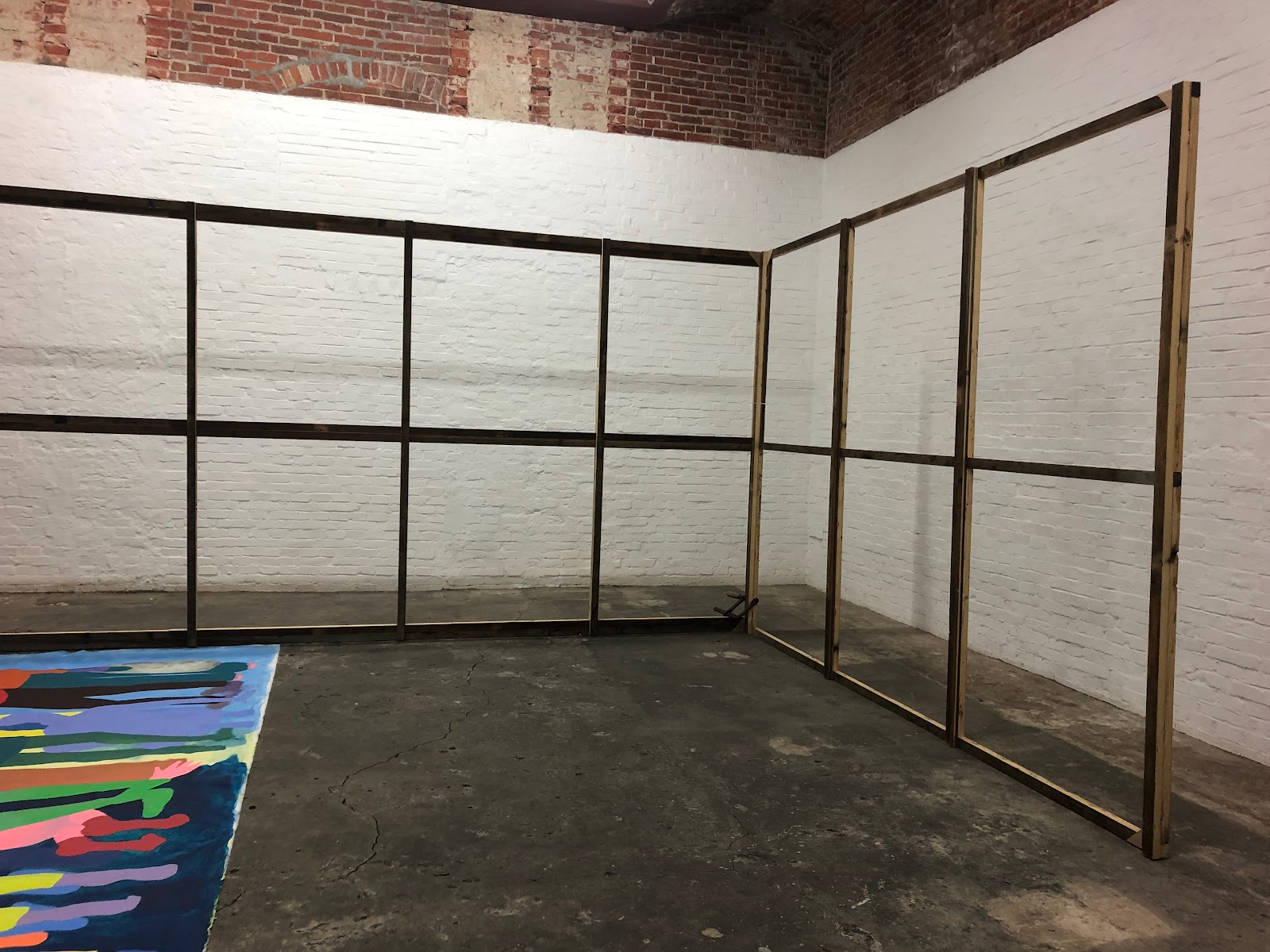
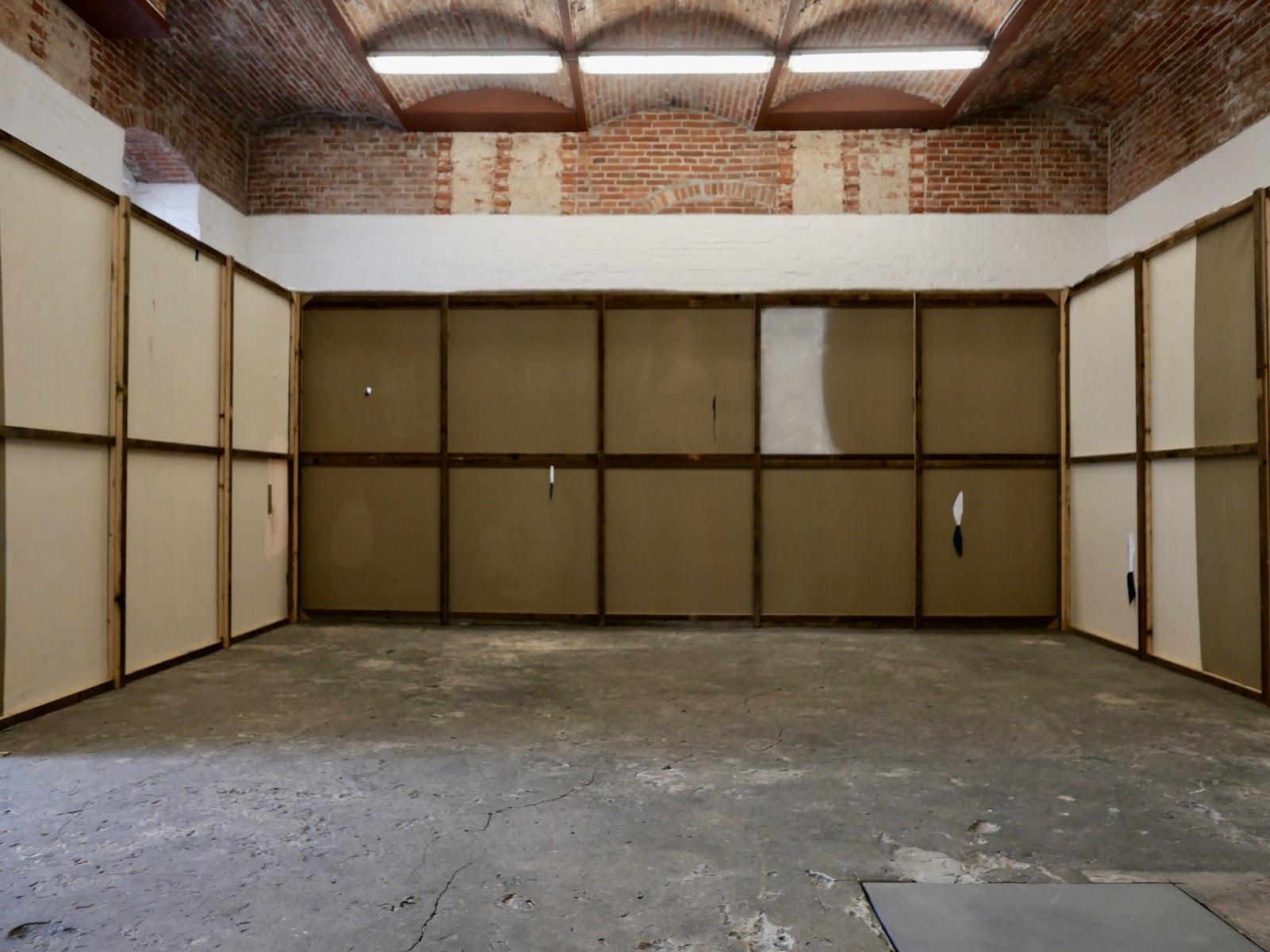
Kamilė Cesnavičiūtė; exhibition build-up

kamilė česnavičiūtė
born in Vilnius, Lithuania, 1996
currently living and working in Groningen, Netherlands


NINE SEAS AWAY


25 jan 2022

Kamilė Cesnavičiūtė poster Michiel Schuurman


    poster design Michiel Schuurman   


invitation Kamilė Cesnavičiūtė: Nine Seas Away

Kunstruimte Galerie Block C

5th of February  - 5th of March, 2022


Kamilė Cesnavičiūtė
Nine Seas Away

We are happy to invite you to our first exhibition of the year!
‘Nine Seas Away’ by Kamilė Cesnavičiūtė will be opening on Saturday 5th of February, from 13 - 17hs.

The artist will be present.

Join us to celebrate this presentation with a brand new work by Kamile.


poster design: Michiel Schuurman


////
On the first floor at ARTisBOOK: TURNSTONE by Sybille Eimermacher.
Februari 5 - Februari 19
Same opening hours

20 dec 2021

Rollable Ramblings Book Launch

BOOK LAUNCH ROLLABLE RAMBLINGS december 18

The new tapestry heavy book of Koen Taselaar Book initiated by Block C,  
texts by Katalin Herzog, translation Jenny Wilson, 
 texts by Katalin Herzog, translation  Jenny Wilson, typeface by @orangeslicetype,   printed   by @zwaanlenoir, published  by @japsambooks, design by Team Thursday.  

Price €30,00 The book can be picked up in the art space by appointment


Rollable Ramblings


5 dec 2021

Bernice Nauta, mythe 'A spider named Feather has a lot to say but has no ears'

 A spider named Feather has a lot to say but has no ears

Recently I came across a situation of three species who were stuck in a loop, a painter, a spider and a bird. The painter was afraid of the spider, the spider was afraid
of the bird, and the bird was afraid of the painter. The painter thought, ‘how to get out of this loop? I should overcome my fear and be like a spider myself. What kind of spider knows about arachnophobia anyway?’

The painter kept on thinking for a long time. ‘What makes a spider a spider? How to become one?’ Then she realized how the spider’s web is like the painter’s canvas. The beautiful thing about the spiderweb is that it’s a trick invented to catch things. It’s setting out a trap, not knowing what will end up inside of it, similar to the fishing net, or the white canvas. Sometimes twigs, leaves or dust end up in the web, and the spider cleans it. Other times a bug flies into it, and it’s a great catch. The painter decided
to mimick the spider’s way of being. She stretched her canvases, cleared her mind, and was sitting down in the corner of the room, waiting. The painter waited for ideas to fall into her mind that she could paint onto the canvas. She realized that to be like a spider is to be non judgmental and to be honest about the fact that ideas are gifts that you get.

The painter waited for a long time, so long that she started doubting, why should she be a painter that wants to be like a spider? ‘Who wants to be bound to a rectangle for the rest of their lives?’ the painter said. ‘Maybe I should stop painting. But then I would have given up before I even started.’

The painter waited more and thought about it for a long time. After a while she thought, ‘wasn’t the plan to paint thought that came to mind? I had many thoughts, but how to paint a painter who doubts whether they should be a painter?’

The painter started to get very hungry and decided to go outside to find food. On the way, the painter found a feather on the ground. She thought ‘this looks like food is nearby!’ Then a woman appeared, the painter couldn’t see her, but she could hear her. The woman said, ‘you’re vegetarian.’ The painter realized that’s true. ‘The bird doesn’t belong in my stomach but in the sky.’ The painter realized that she should paint a sky, so she went back to the studio and painted a sky. She glued the feather onto the painting. ‘Now the feather is back in the sky, where it belongs,’ the painter said.

What a stupid painter, can’t she distinguish a real sky from a painted sky

But at least she does not claim the sky as her creation, as Yves Klein did when he declared that the sky above Nice was one of his paintings, which he then signed.
He must have been confused that he was the one who made the sky.

Then the painter heard the woman speak again. ‘I’m a spider named Feather, I have a lot to say but have no ears.’ The painter thought, ‘finally the spider-woman
I waited for so long is coming to show me what to paint!’

The painter also thought, ‘what a coincidence that this spider-woman is called Feather.’ As Feather in French is Plume. And did you know that Nom de Plume means a writer’s pseudonym? The painter thought again, ‘Is the woman I’m hearing my Nom de Plume?’ The painter said, ‘Woman come out and help me, show me what to paint! Together we would have a lot of limbs, that would make a quick and crafty painter.’ The woman didn’t reply. The painter called out again, ‘spider-woman, come to help me, together we can make great fortune!’

‘I take 50% and you take 50% of each sale!’ The woman didn’t reply again. Then the painter realized, when the spider-woman named Feather spoke, she said she has a lot to say but has no ears. ‘She can not hear me cry,’ the painter said.

A spider named Feather has a lot to say but has no ears

Recently I came across a situation of three species who were stuck in a loop, a painter, a spider and a bird. The painter was afraid of the spider, the spider was afraid
of the bird, and the bird was afraid of the painter. The painter thought, ‘how to get out of this loop? I should overcome my fear and be like a spider myself. What kind of spider knows about arachnophobia anyway?’

The painter kept on thinking for a long time. ‘What makes a spider a spider? How to become one?’ Then she realized how the spider’s web is like the painter’s canvas. The beautiful thing about the spiderweb is that it’s a trick invented to catch things. It’s setting out a trap, not knowing what will end up inside of it, similar to the fishing net, or the white canvas. Sometimes twigs, leaves or dust end up in the web, and the spider cleans it. Other times a bug flies into it, and it’s a great catch. The painter decided
to mimick the spider’s way of being. She stretched her canvases, cleared her mind, and was sitting down in the corner of the room, waiting. The painter waited for ideas to fall into her mind that she could paint onto the canvas. She realized that to be like a spider is to be non judgmental and to be honest about the fact that ideas are gifts that you get.

The painter waited for a long time, so long that she started doubting, why should she be a painter that wants to be like a spider? ‘Who wants to be bound to a rectangle for the rest of their lives?’ the painter said. ‘Maybe I should stop painting. But then I would have given up before I even started.’

The painter waited more and thought about it for a long time. After a while she thought, ‘wasn’t the plan to paint thought that came to mind? I had many thoughts, but how to paint a painter who doubts whether they should be a painter?’

The painter started to get very hungry and decided to go outside to find food. On the way, the painter found a feather on the ground. She thought ‘this looks like food is nearby!’ Then a woman appeared, the painter couldn’t see her, but she could hear her. The woman said, ‘you’re vegetarian.’ The painter realized that’s true. ‘The bird doesn’t belong in my stomach but in the sky.’ The painter realized that she should paint a sky, so she went back to the studio and painted a sky. She glued the feather onto the painting. ‘Now the feather is back in the sky, where it belongs,’ the painter said.

What a stupid painter, can’t she distinguish a real sky from a painted sky

But at least she does not claim the sky as her creation, as Yves Klein did when he declared that the sky above Nice was one of his paintings, which he then signed.
He must have been confused that he was the one who made the sky.

Then the painter heard the woman speak again. ‘I’m a spider named Feather, I have a lot to say but have no ears.’ The painter thought, ‘finally the spider-woman
I waited for so long is coming to show me what to paint!’

The painter also thought, ‘what a coincidence that this spider-woman is called Feather.’ As Feather in French is Plume. And did you know that Nom de Plume means a writer’s pseudonym? The painter thought again, ‘Is the woman I’m hearing my Nom de Plume?’ The painter said, ‘Woman come out and help me, show me what to paint! Together we would have a lot of limbs, that would make a quick and crafty painter.’ The woman didn’t reply. The painter called out again, ‘spider-woman, come to help me, together we can make great fortune!’

‘I take 50% and you take 50% of each sale!’ The woman didn’t reply again. Then the painter realized, when the spider-woman named Feather spoke, she said she has a lot to say but has no ears. ‘She can not hear me cry,’ the painter said.

Bernice Nauta, September 2021 

27 nov 2021

expo A spider named Feather has a lot to say but has no ears


A spider named Feather has a lot to say but has no ears 

Bernice Nauta

foto's Robert Mulder


15 nov 2021

Bernice Nauta, exhibition text, Gisanne Hendriks

 Eng.

Bernice Nauta
A spider named Feather has a lot to say but has no ears
06 November - 11 December 2021
Block C, Groningen

//

Bernice Nauta (1991) graduated from KABK in The Hague in 2013, and is currently pursuing her Master’s degree ‘F for Fact’ at the Sandberg Institute in Amsterdam. Based in The Hague, she is part of the artist-run gallery Billytown where she previously organized several exhibitions. Her work has been shown in solo and group exhibitions around The Netherlands, and in such cities as Brussels and New York. Bernice also followed residency programs at NIKI in Hannover (DE), Orbital Residency, Cantabria (ES), and Sundaymorning@ekwc, Oisterwijk (NL).

//

Exhibitions in Block C do not often have such long titles as A spider named Feather has a lot to say but has no ears. The title was created by the artist and refers to the myth that she wrote for this exhibition. This myth does not refer to a distant past, nor is it a prevailing thought that needs to be debunked. Instead, it is a narrative in and of itself that reveals Bernice’s internal dialogue.1 

The myth was written in response to a struggle of two conflicting perspectives that constantly clash with one another: the fear of making more paintings and the strong will to paint. Looking for a way out of this spiral, Bernice came up with the idea of putting herself in the shoes of the object of one of her fears: the spider. The sculpture titled What kind of spider knows about arachnophobia? (2021) responds to this transformation. 

Near the heater, at the right-hand side of the entrance in the exhibition space, a broom leans against the wall. In between the wall and the broom, a thread of headphone cables has been stretched in the form of a spider web. An excerpt from the song ‘Free Will and Testament’ by Robert Wyatt is playing through the headphones. We can hear the words “what kind of spider knows about arachnophobia?” It is a well-known fact that spiders do not fear their own kind. By imagining herself as being the spider, Bernice tries to outsmart her fear. 

Bernice Nauta, zaaltekst NL., Gisanne Hendriks

 Bernice Nauta

A spider named Feather has a lot to say but has no ears
06 november t/m 11 december 2021
Block C, Groningen

//

Bernice Nauta (1991) is in 2013 afgestudeerd aan KABK in Den Haag, en volgt momenteel de master F for Fact aan het Sandberg Instituut in Amsterdam. Ze woont in Den Haag waar ze deel uitmaakt van de door kunstenaars gerunde galerie Billytown. Ze organiseerde er tentoonstellingen en haar werk is in verschillende tentoonstellingen te zien geweest. Ze volgde daarnaast residency-programma’s in NIKI in Hannover (DE), Orbital Residency, Cantabria (ES) en Sundaymorning@ekwc in Oisterwijk (NL).

//

Exposities in Block C hebben niet vaak zo’n lange titel als deze: A spider named Feather has a lot to say but has no ears. De titel is bedacht door de kunstenaar en verwijst naar een mythe die zij geschreven heeft. De mythe gaat niet terug naar een ver verleden en is ook geen heersend gedachtegoed dat ontkracht moet worden. Het is een vertelling die de interne dialoog van Bernice blootlegt.1 

De mythe is geschreven naar aanleiding van een constante strijd tussen de angst om nog meer schilderijen te maken en anderzijds de sterke wil om te schilderen. Twee tegenstrijdige perspectieven die elkaar continu afwisselen. Zoekende naar een uitweg uit deze spiraal, kwam Bernice bij het idee om in de huid van een van haar angsten te kruipen; de spin. Het werk What kind of spider knows about arachnophobia? (2021) haakt in op deze gedaanteverwisseling. Bij de verwarming, rechts van de ingang van de ruimte staat een bezem tegen de muur. Tussen de bezem en de muur is een draad van oordopjes in de vorm van een web gespannen. Uit deze oordopjes komt een fragment uit het liedje Free Will and Testament van Robert Wyatt, waarin we de woorden “what kind of spider knows about arachnophobia?” horen. Spinnen kennen geen angst voor hun eigen soort. Door in de huid van de spin te kruipen, probeert Bernice de angst slim af te zijn. 

6 nov 2021

opbouw A spider named Feather has a lot to say but has no ears

opbouw

A spider named Feather has a lot to say but has no ears  

Bernice Nauta


`


28 okt 2021

23 okt 2021

Bernice Nauta poster Hansje van Halem

 Bernice Nauta poster


ontwerp: Hansje van Halem
riso: Jo Frenken


getallen en Patronen Annesas Appel

 Getallen en patronen, Annesas Appel

foto's Robert Mulder